
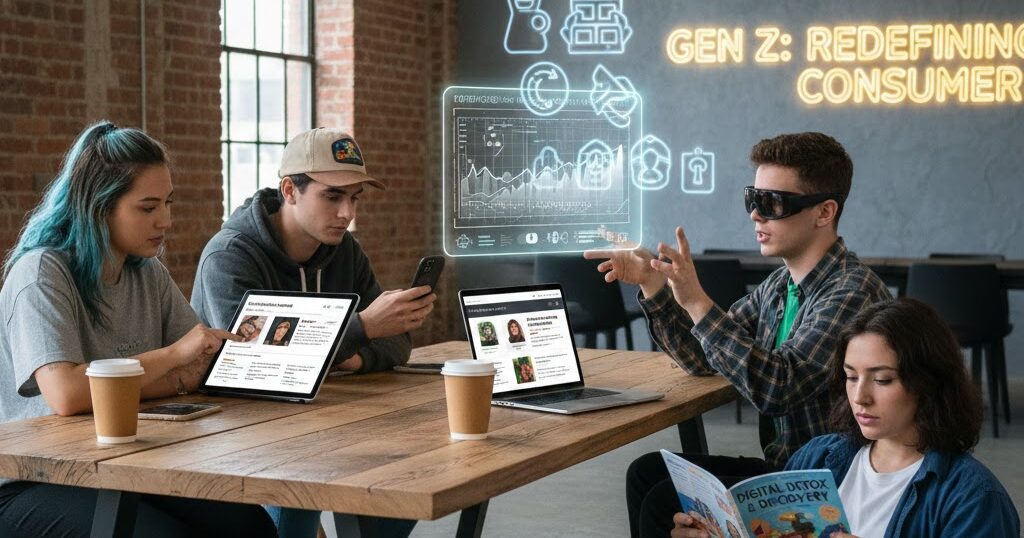
🧠The Internet Generation: How Gen Z is Redefining Consumer reading
🌎 Structure Overview (Gen Z)
Introduction😐
- Set the scene: What is “the Internet Generation”?
- Define Gen Z (born roughly 1997 to 2012).
- How their upbringing (internet, smartphone, social media) shaped their mindset.
- Compare them briefly to Millennials and Gen Alpha
- Introduce the core idea: Gen Z isn’t just consuming differently–they’re reshaping entire industries
🧠Introduction: Welcome to the Internet Generation (Gen Z)
Gen Z –the generation born roughly between 1997 and 2012 — is unlike anything the world has seen before. They grew up online, they think in memes, and they scroll faster than brands can advertise. But here’s the think: they’re not just consuming content ~ they’re shaping it.
As well, For older generation, the internet was a tool. For Gen Z, it’s a way of life. form school projects to side hustles, social validation to political awareness ~ everything happens online. That makes their buying behaviour deeply digital, emotionally driven, and socially conscious.
Brands that fail to understand Gen Z’s mindset are getting left behind. Those that get it ~ like Nike, Glossier, and Duolingo ~ are creating not just customers but communities.
So, what’s different about this generation? let’s break down exactly how Gen Z is rewriting the rules of consumer behaviour.
💡 Chapter 1: The Digital DNA of Gen Z
If Millennials adapted to the internet, Gen Z was born in it. These are kids who had iPads before they could write their names, and they learned about news from TikTok, not TV.
According to a 2024 Pew Research study, over 95% of Gen Z uses smartphones daily, and nearly 80% spend more than four hours a day online. The result? An audience that’s hyperconnected, informed, and constantly curating their digital identities.
However, They crave authenticity, inclusivity, and individuality — and they expect brands to reflect those values. It’s why campaigns with real people, not polished models, perform better. They don’t just want to buy products; they want to buy into stories and values they believe in.

💬 Chapter 2: The Shift from Materialism to Meaning (Gen Z Purpose over possessions)
Meanwhile, Gone are the days when owning flashy cars or designer logos defined success. Gen Z is more about meaning than material. They care deeply about social issues — climate change, mental health, equality — and they expect brands to care, too.
Products are cool, but purpose sells.
Brands like Patagonia or The Body Shop thrive because they connect profit to impact. According to McKinsey, 70% of Gen Z consumers say they try to buy from ethical and sustainable brands.
If a company’s values don’t align with theirs? Canceled. Instantly.
This generation uses its wallet as a weapon — rewarding transparency and punishing performative activism. They’re not just buying; they’re voting with their money.

📱 Chapter 3: Social Media as a Marketplace (Gen Z Social media shopping)
Scroll. Stop. Add to cart.
That’s the new consumer journey. Platforms like TikTok, Instagram, and YouTube have become modern shopping malls — except you don’t walk around; you swipe.
TikTok has become a powerful product discovery engine. One viral video and a random lip gloss or gadget sells out overnight. Hashtags like #TikTokMadeMeBuyIt have millions of hits.
Meanwhile, Gen Z trusts influencers and creators more than traditional ads. Micro-influencers, in particular, dominate — because they feel real. A recommendation from someone relatable carries more weight than a celebrity endorsement.
Social proof > paid promotion.
🧩 Chapter 4: Personalization and Data
Gen Z grew up with algorithms that know them better than their parents do. Netflix recommends shows they’ll love. Spotify curates playlists that match their moods. Instagram tailors feeds to their interests.
That’s why they expect the same personalization from brands.
Generic ads? Scrolled past. Personalized experiences? Clicked instantly.
But here’s the paradox: while Gen Z loves tailored content, they’re also more privacy-aware than previous generations. They’ll accept data collection — only if it feels consensual and transparent.
Smart brands use this responsibly, leveraging data to create value, not just sell products.
🎨 Chapter 5: The Rise of Creator Culture (Gen Z creators)
On the other hand, Gen Z doesn’t dream of becoming movie stars — they want to be creators.
They’re turning passions into paychecks through YouTube, TikTok, or personal brands.
Consequently, This “creator economy” is worth over $250 billion globally, and Gen Z is driving most of it. They’re blurring the lines between consumer and influencer. When they recommend something, their friends actually buy it — not because it’s an ad, but because it’s real.
Brands that collaborate with creators rather than just using them as ad tools see much higher engagement and trust. Authentic partnerships always beat scripted campaigns.
💬 Chapter 6: Trust, Transparency, and Authenticity
Notably, This generation has the best BS detector in history.
If your campaign feels fake, filtered, or too corporate — they’re out.
Moreover, They wants brands that are honest, humorous, and human.
That’s why companies like Duolingo, Wendy’s, and Ryanair are killing it online. They meme themselves. They talk like real people. They’re not afraid to be a little chaotic.
Trust is the new currency, and the only way to earn it is through transparency. Own your mistakes, be open about your process, and keep your communication authentic.
💸 Chapter 7: The New Path to Purchase (Reviews build trust)
At the same, time, For older generations, buying was linear: see ad → consider → buy.
For Gen Z, it’s more like: see TikTok → read Reddit → watch YouTube → buy on Instagram → review on X (Twitter).
They multitask their shopping journey across multiple platforms. Reviews, recommendations, and community opinions shape their final decision.
That means marketers have to show up everywhere — not just on search engines or Facebook. The real battle is happening in comment sections, DMs, and micro-communities.
💥 Chapter 8: Similarly, Technology and the Future
Gen Z isn’t just ready for the future — they’re already living in it.
AI-driven ads, AR try-ons, and VR shopping experiences are becoming the norm.
Brands like IKEA use augmented reality for home design. Nike offers virtual sneakers through the Metaverse. Even Gen Z fashion houses are experimenting with digital clothing NFTs.
As AI and immersive tech grow, shopping will become less about transactions and more about experiences.
🌈 Chapter 9: Globalization and Cultural Fluidity
Moreover, Gen Z doesn’t see borders the way older generations do.
They listen to K-pop, wear streetwear inspired by Tokyo, and watch Netflix shows from Spain. The internet has made culture borderless — and that’s influencing how they shop.
Local brands now have global reach. A small creator from India can go viral in New York overnight. That’s the beauty of this era: cultural exchange drives consumption.
🧭 Chapter 10: What Brands Need to Learn
If you’re a brand trying to win over, here’s the formula:
-
Be transparent. They’ll fact-check everything.
-
Be inclusive. They expect representation in your visuals and messaging.
-
Be interactive. Talk with them, not at them.
-
Be fast. Trends move at lightning speed — adapt or get left behind.
-
Be real. No filters, no fake promises. Just honesty and personality.
Gen Z doesn’t want perfection; they want connection.
💬 Conclusion: The Future Belongs to the Digital Natives
As a result
Gen Z isn’t just redefining consumer behaviour — they’re redefining the entire relationship between people and brands.
They’ve merged content with commerce, purpose with profit, and individuality with influence.
If Millennials brought digital shopping to life. Gen Z is Redefining Consumer reading
Specifically, The brands that succeed in the future will be the ones that speak their language — the language of memes, meaning, Because when it comes to Gen Z, you can’t just market to them —
you’ve got to belong with them.
for more Knowledge: digitalbajar.shop
[…] Want to know about: here’s the link 👇 What is SEO “powerhouse” Gen Z is Redefining Consumer reading 2025 “TRANSPARENCY” (powerful) Social Media Domination for 2025 “MAESTRO” (Control) Chapter-1: The Winning Advantage […]
…